Showing posts with label Beach Boys. Show all posts

Sunday, June 14, 2015

Movie Review: Love & Mercy

Brian Wilson’s production masterpiece, “Good Vibrations,” was the apex of his popular success, topping the charts and selling more than a million copies. Released in October 1966, it was a psychedelic harbinger of 1967’s so-called Summer of Love, providing both a sound and a lexicon for nascent hippiedom everywhere.

Much could be – and has been – written about what makes “Good Vibrations” so innovative, but perhaps the most distinctive element is its modular construction. Rather than a through-composed and performed song, “Good Vibrations” is a mosaic, pieced together from months of recording sessions and untold numbers of musical segments that on their own seem quite unrelated to each other. Brian’s genius was in his overarching vision for the track and the workmanship involved in assembling the collage of sounds into a cohesive, compelling, and insanely catchy whole.

It was a new way of recording popular music, and the next evolution was obvious: applying this modular process to an entire album. That was what he attempted with Smile, aborted at the time and only completed under his own name in 2004. With Smile, specific sections of songs would be treated classically in a theme and variations mode, surfacing in slightly altered ways in other songs throughout the album. It was a daunting challenge, and with resistance from certain members of the Beach Boys and from Capitol Records, along with growing paranoia and self-medicating drug use, the project fell apart and was abandoned by its ambitious creator – who slipped gradually into a reclusive life of sporadic musical activity and ultimately an enveloping shroud of fear, pain, and undiagnosed mental illness.

In directing the new Brian Wilson biopic, Love & Mercy, Bill Pohlad effectively employs Brian’s modular approach. At the highest level, Pohlad slices Brian’s life into segments from the 1960s, where he is enjoying his creative peak with Pet Sounds, “Good Vibrations,” and Smile; and the 1980s, where he is under the unethical care of a doctor who after saving his patient’s life is now angling to siphon his fortune. But then Pohlad goes further, dicing his subject’s life into daring – and often scary – cubes that take us inside Brian’s head (at one point through his mostly deaf right ear) to hear the inner voices that plague him to this day; inside the eyes of his girlfriend and eventual second wife, Melinda, as she tries to break the legal and pharmaceutical hold that the doctor has on him; and inside Brian’s bedroom, where a prismatic, 2001: A Space Odyssey-like sequence shows us Brian in triplicate: as a struggling child, a struggling artist, and a struggling survivor, all observing each other lying near-catatonic in bed (where the Brian in the 1970s – a fascinating period alluded to but not covered in the film – spent the better part of three years under the covers, ballooning in weight and occasionally being pushed, and ultimately miscast, on stage with the Beach Boys, with seriocomic consequences).

As a certifiable Brian Wilson nut, I saw the movie three times in its opening week. It has been widely reviewed, and nearly unanimously raved, far and wide. My goal is not to review it as such, but to explore questions it raises for me. Chief among them is this: How is my experience of the movie different from that of a viewer who knows something or nothing about the history of Brian Wilson and the Beach Boys? Part of what thrills me about the movie is that it seems to have been created for the choir, the brotherhood, the initiates; there is a distinct lack of context, explication, and connective tissue that would help a Brian novice follow along. I know the background and significance of certain scenes and don’t need Pohlad or the scriptwriters to awkwardly explain them to me (though this does happen from time to time, how else to introduce who Tony Asher and Van Dyke Parks are – two names that certainly separate the Brian nuts from the Brian novices).

Without providing spoilers, here are a few examples.
  • Brian’s father, Murry Wilson, informs us in nearly every appearance that he was fired by his son. It is never specifically stated that Murry was the band’s manager in their earlier years and Brian, in a rare display of backbone in family matters, dismissed him of his duties because of his meddling and bad vibrations.
  • While recording the Pet Sounds vocal tracks, Mike Love complains about the lyrics to a song called “Hang On to Your Ego.” (Mike’s balking at the lyrics and music for Pet Sounds and Smile is both historically accurate and part of the battering Brian’s fragile psyche took during this period.) The actual instrumental track is heard clearly. If someone seeing this movie didn’t already own Pet Sounds and decided to buy it (a win in every respect), that person would not find a song by that title. That’s because Brian relented and allowed Mike to write new lyrics. The song as released is called “I Know There’s an Answer.” That part is not mentioned in the film. (Interestingly, Frank Black of the Pixies recorded a cover of “Hang On to Your Ego” on his first solo album in 1993.)
  • The Smile sessions are represented largely through a single sequence involving two songs performed in different contexts: Brian playing “Surf’s Up” by himself at the piano in his house; and “Fire” (also known as “Mrs. O’Leary’s Cow”) in the studio with the Wrecking Crew (the ace session players he employed). Both of these songs are of monumental importance to the Brian story; yet neither are identified by name, nor is their respective significance shown or explained.
    • The “Surf’s Up” bit is clearly a recreation of a solo performance that Brian taped for a 1967 CBS TV special about pop music hosted by Leonard Bernstein in the midst of the Smile chaos. In the special, the song was summed up thusly: “There is a new song, too complex to get all of first time around. It could come only out of the ferment that characterizes today's pop music scene. Brian Wilson, leader of the famous Beach Boys, and one of today's most important pop musicians, sings his own ‘Surf’s Up.’ ... Poetic, beautiful even in its obscurity, ‘Surf’s Up’ is one aspect of new things happening in pop music today. As such, it is a symbol of the change many of these young musicians see in our future.”
    • As for “Fire,” the track is an instrumental that brilliantly uses strings, whistles, and percussion to emulate the sound of a raging inferno. Brian insisted that all the musicians wear plastic fire helmets, and he created a small wood fire in a trash can in the studio to get everyone in the mood. This is recreated faithfully in the movie, except that Brian is shown holding smoldering sticks and running through the studio. What is not mentioned is that while recording “Fire,” a building across the street from the studio actually did catch fire. Brian, in his growing paranoia, believed that he had somehow been responsible for it; thus, this haunted track has become considered “another brick in the wall” of Brian’s ultimate breakdown.

Personally, I do not consider these to be devastating omissions because I can fill in the blanks and connect the dots; in other words, Pohlad is speaking to me in shorthand and I get it because I know the shorthand. The fact that others do not, however, could result in a different, perhaps less pleasing, experience for them.

There are at least two consolations. First of all, viewers should be assured that no matter how strange or confusing or even unrealistic certain scenes might be, this movie is highly factual. As with all movies based in fact, the chronologies are sometimes altered for clarity and more fluid storytelling. For example, the movie portrays Pet Sounds as having been the first album he produced after he retired from the road following his nervous breakdown/anxiety attack aboard an airplane. In reality, that event occurred in December 1964 and he produced three albums from then until Pet Sounds. But aside from such directorial conveniences, there is a high degree of veracity throughout the movie.

The other consolation is that the viewer is supposed to feel disoriented. The constant sudden shifts between the 1960s and 1980s, the disturbing aural collages that simulate the voices Brian hears in his head, the jerkiness of the hand-held cameras, are all a way through which we can empathize with Brian's splintering mental and emotional states. If things might seem confusing for the viewer, be assured they were confusing for Brian as he was living them.

I do have a few quibbles with the movie, things that, again, a Brian nut would notice and take exception to that likely would be uncontested by a Brian novice:
  • Aside from chief antagonist Mike Love, the rest of the Beach Boys are not well cast and their lines (those who have them) are hardly worth recording. The actor playing Carl Wilson is too thin and is seen very often holding a beer bottle (he had a problem with alcohol later but it wasn’t a long-lasting situation; his Wiki page doesn’t even include the word “alcohol”). The actor playing Al Jardine is too tall. Dennis Wilson’s lines are about nothing but sex (not far from the truth, but certainly not accurate; by 1970, Dennis had proven himself a talented and sensitive artist in his own right).
  • Brian’s first wife, Marilyn, is shown to be young and dippy, which she probably was to an extent, but it’s hardly a fair portrait. Melinda is certainly a stronger personality than Marilyn Wilson, but Marilyn had to live with Brian at his worst, and she deserves more compassion.
  • Brian’s drug friends in the movie are dumb, generic stereotypes; his real drug friends were more interesting and accomplished people.
  • Mentioned earlier, Tony Asher (Pet Sounds) and Van Dyke Parks (Smile) were Brian’s primary lyricists of the time period. They enjoyed close creative collaborations with Brian and produced excellent work; they deserve more and better attention in the movie.
  • There is a scene after Smile is abandoned that shows a fat, stoned, unresponsive Brian sitting by the pool, with Marilyn calling out from inside the house that their baby (Carnie Wilson, though unidentified) just smiled. “Look at her smile,” Marilyn shouts. “She has your smile.” Yes, we get it. Brian has no Smile.

Aside from these minor complaints, though, the cast is extraordinary. Paul Dano is particularly impressive and could well receive an Oscar nod. As the 1960s Brian, he gained 35 pounds, took piano lessons, and does a great job actually playing and singing in the movie. He portrays the ecstasy and agony of Brian’s art and life equally effectively. John Cusack as the 1980s Brian has less of an acting challenge (mainly tics, fatigue, and social awkwardness) but he embodies Brian’s innate warmth and humor in his portrayal, and the way in which he delivers the line where he tells Melinda that he hears voices but didn’t want to tell her because he didn’t want to scare her off (shown in trailers) is very powerful because Cusack shows that Brian is so clearly vulnerable and scared himself. Elizabeth Banks as Melinda is exceptionally good with uncanny facial expressions that respond perfectly to the craziness she witnesses; she also is absolutely gorgeous in every scene. Paul Giamatti as the doctor (as you can tell by now, I don’t wish to honor the character’s one-time existence on this mortal coil by mentioning his name) is spine-tinglingly creepy. One reviewer astutely pointed that that while Murry Wilson and the doctor did not look anything alike in real life, the actors playing them in the movie have a great deal of physical resemblance to each other, emphasizing their dual-villain status.

So to sum up, if you are a Brian nut, the movie is a must-see. If you are a Brian novice, what kind of movie is it for you? As a biopic, it is about as good as the genre produces. You really will learn things about Brian and the Beach Boys, things that two previous TV movies on the band completely and perhaps deliberately got wrong (one was produced by John Stamos, a friend of Mike Love’s, and it’s laughably biased in favor of the man in whose “honor” a thriving Facebook group is named Mike Love Is a Douchebag). If you just plain like the music and want to be entertained, you will be and the music is there in all its glory. If Jurassic World is sold out, and Love & Mercy is the only movie you haven’t seen yet, go ahead. Two hours with Brian Wilson is a lifetime with anyone else. You will be touched by the story of a man who made the music he had to make despite the cost – which was nearly his life.

Saturday, September 27, 2014

Rebooting the Blog: Introduction/King Crimson Concert Review

Have you ever looked up the definition of a word that you already know what it means, just to see what the actual definition is? I just did that with “reboot” and the definition was “boot again.” I guess it serves me right. After all, my life philosophy is “You don’t need a weatherman to know which way the wind blows” (a line by Bob Dylan), which to me has always meant, “have faith in your own instincts and intelligence, you don’t need an authority to tell you what’s clearly obvious to you.”

So why did I bother in the first place? Because I am rebooting my blog and I thought it would be fun to do it dictionary-style. I was wrong. And I may be wrong about rebooting my blog but since most of my readers are probably people who found it by accident, it doesn’t really matter. But to me and to anyone who has actually popped by with any regularity over the last few years, it does matter, or it should.

From the get-go, my blog was intended to be one way of building what the dying publishing industry calls a “platform” – an established area of expertise one has, along with a built-in following who might be interested in purchasing one’s books. The platform I chose – perhaps more accurately, it chose me – is music. After all, my first novel, The Grave & The Gay*, was based on a 17th-century English folk ballad, while the second one I am currently struggling mightily with was inspired by a song by jazz singer Cassandra Wilson.

Maintaining a blog is no easy deal, as I soon found out, and I have frequently written posts that have nothing to do with music. That may prove to be true as well in the future, but to help invigorate my blog and infuse it with meaning, I have decided to reboot it primarily as a concert and CD review site. I have plenty of both to get me started, but if you are reading this and you have a CD you’d like me to review, please contact me via my website – http://jasonmrubin.com – and I will tell you how to send it to me.

I should note that I have a particular interest in prog and jazz, but am a fan of rock, pop, soul, and folk, as well as ethnic/world music and anything that doesn’t fit neatly in the dying music industry’s various marketing labels. I also write CD reviews and features for Progression magazine, and reviews and articles for the Arts Fuse online magazine and Musicovation blog, so I’m not a complete dodo.

Before I launch into my first review, I want to remind/inform my readers (intentional or accidental, you both are welcome here) the meaning behind the blog’s title, Dove Nested Towers. It is a typically inventive phrase by Van Dyke Parks that is part of the lyrics to the Brian Wilson masterpiece composition “Surf’s Up.” Originally written in 1966 for the Beach Boys’ aborted Smile album, the song eventually appeared in 1971 as the title track of the band’s LP offering that year. Brian did his own version in 2004 on Brian Wilson Presents SMiLE, and five different versions appear on the 2011 Smile Sessions boxed set. It is my favorite song.


Any band still going that started out in the late '60s by now will have experienced any number of lineup changes. Typically these are due to death or the intentionally vague “musical differences” and they tend to involve a single player. King Crimson is anything but a typical band. When they have a lineup change, it usually means everyone but the guitarist has been let go. Indeed, Robert Fripp, the seated lead guitarist who dresses and appears as composed as an accountant but plays like a zombie slayer, has been the one and only constant in what has now been eight different lineups since 1969.

These lineups have included a trio, quartet, quintet, and a double trio composed of two drummers, two guitarists, and two bass/Stick players. The eighth lineup may be the oddest one yet: seven musicians, including no fewer than three drummers who are set up in the front of the stage (Gavin Harrison, Bill Rieflin, and Pat Mastelotto), with two guitarists (Fripp and Jakko Jakszyk), bassist/Stick master Tony Levin, and sax/flute guru Mel Collins comprising the second line.

One reason for the many lineup changes (the band has accommodated a total of 21 full-time musicians in its history) is that it periodically breaks up and reforms. The first hiatus was from 1974-1981. By 1974, the band had endured three lineup changes in five years. The 1981 lineup had a successful three-year stint before ceasing operations until 1993, when the double trio was introduced. Two more hiatuses take us to the present day.

With each tour, Fripp takes pains to warn fans not to arrive at the venue with expectations that anything from prior lineups will be played. Typically, some older songs are included in the set lists, but the idea of a “greatest hits” repertoire is anathema to Fripp, who regards Crimson as “a way of doing things” rather than as an ongoing jukebox.

So it was that I arrived at the Emerson Colonial Theatre in Boston to experience how King Crimson would be “doing things” after 45 years of stops and starts. In spite of Fripp’s warnings, lineup #8 did seem to suggest that a retrospective approach to song election was possible. After all, Harrison was with the band in 2008; Jakszyk performed in a Crimson alumni band and has collaborated with Fripp, Collins, and Harrison; Mastelotto and Levin have done a few stints with Crimson together and apart, and Collins goes as far back as 1970.

What transpired was beyond all my expectations and, dare I say, fantasies. It should be noted that my favorite era of King Crimson was 1973-74; that three-album span featured my favorite rock-oriented drummer, Bill Bruford, as well as bassist/vocalist John Wetton, a brilliant player who seemed ever to be in search of fame and finally found it in 1983 in the band Asia. That era was particularly well-represented, and in fact the set’s opener (“Larks’ Tongues in Aspic, Part One”) and closer (“Starless”) came from those albums, along with four other songs (“Red,”, “One More Red Nightmare,” “The Talking Drum,” and “Larks’ Tongues in Aspic, Part Two”). That, for me, was well worth the price of admission.

The rarely acknowledged Islands album from 1972 (the last of three that Collins appeared on) surprisingly offered two songs, “The Letters” and the jazz-metal instrumental workout, “Sailor’s Tale.” Collins was also proud representative of the 1970 tune “Pictures of a City,” blaring on sax with the force of a Peter Brotzmann (look him up). Collins, whom I saw on Roger Waters’ first solo tour in 1984, was one of four MVPs of this show, playing soprano, alto, tenor, and baritone sax in addition to flute.

Of the eight remaining songs, six date from after Bruford left the band, at which time I took my own hiatus from Crimson’s only-constant-is-change gyrations. As such, I was not familiar with them, though the level of musicianship was consistently amazing throughout the show. As a final encore, the band rocked through the touchstone tune, the opener on Crimson’s 1969 debut album, “21st Century Schizoid Man,” which featured an astounding drum solo by Harrison, who was another MVP, as was Tony Levin, who played three different basses and Chapman Stick and had the unenviable responsibility of anchoring the heavy, complex playing of this seven-legged sea monster.

The final MVP I would give to Fripp himself, who says nothing on stage and yet says all there needs to be said on his guitar. It could well be said that Robert Fripp is also a way of doing things, and like the band he has carried on through thick and thin, there is no one who does it anything like he does. As for the three drummers, I feel that Harrison could have done the job himself (as, indeed, Bruford could have done, and maybe would have if he and Fripp were not currently as close as Ray and Dave Davies).

It is inevitable that this lineup will cease to exist and another hiatus will begin. But Fripp is 68 now and one has to wonder how much more of this he can take. One night was powerful enough for me; imagine being in the midst of it night after night. He has finally plumbed the depths of the King Crimson catalogue and past lineups so if there is a ninth lineup, it will be a challenge to make it a surprising one. But setting up and facing challenges is ultimately what King Crimson is all about; indeed, it is what it does best.


Sunday, April 17, 2011

Musings on Record Store Day

Yesterday was Record Store Day, an annual, nationwide, well-intentioned attempt to get people back to record stores – specifically, independent neighborhood stores. Whether it ultimately is successful long-term in stemming the tide of online purchasing and downloading of music, or just a last-gasp effort from a doomed industry, I enjoy RSD and treat it as a holiday of sorts. On this day (it's been going on since 2008), my kids know to leave me alone and let me commune with thousands of pieces of plastic.

They don’t quite understand my fascination with record stores, of course. Being 14 and four, they (well, the older one anyway) get their music from the radio, YouTube, and any number of music-sharing sites. The idea of cracking a cellophane seal, handling a disc, God forbid flipping a platter that had to be removed from not one but two sleeves after 15-20 minutes to hear another 15-20 minutes of music speckled with pops, is as beyond their comprehension as a washboard is to me.

I, too, no antiquated primate, have downloaded plenty of songs from the Internet. It’s faster and cheaper, though the physical space savings are offset by the amount of hard disk space they take up on my computer. Many websites also offer free (and illegal) downloads of albums, as well as bootlegged live recordings you would never find at most reputable record stores.

To offset the allure of sit-on-your-ass music procurement, Record Store Day has become a trigger for the creation of special products to be sold or distributed at RSD-participating stores. These are publicized well in advance and as a result many stores see long lines of collectors (and, unfortunately, eBay resellers) assembling outside hours prior to opening. This means that many of the most coveted items sell out quickly, which is a shame for those of us of a certain age that may be coaching their kid’s soccer game that morning. But from the perspective of a local, independent record store, this is the whole point of RSD and a signal of its success. For that one day, anyway, hordes fill the stores.

Every RSD, I enjoy picking up special sampler discs and other cool stuff. The store I frequent, part of a legendary local chain called Newbury Comics, uses RSD as an excuse to give away piles of promotional materials that have been taking up space in their storeroom. Posters, stickers, magnets, poor-selling or promo-only albums are free for the taking. I’ve often found wonderful treasures in these piles. Just yesterday, I came away with a Beach Boys 78 rpm set that features official and alternate takes of “Good Vibrations” and “Heroes and Villains” over four ten-inch sides on sale for $9.59, the new CD by The Band’s Robbie Robertson on sale for only $7.99, two free jazz CDs, a free t-shirt for a movie I’ve never heard of, and a free promotional poster for Brian Wilson Reimagines Gershwin. Two years ago, I got a free orange-vinyl single by Brian Wilson so he’s become sort of an RSD totem for me.


Still, no matter how much fun RSD can be, to me the allure of being in a record store is not about the products or the pricing. Rather, it’s the atmosphere, the community. A record store like an archives or a library. There’s history there, and lots and lots to learn. Some of my favorite music-buying experiences have happened in record stores where I was shown something or where I had the opportunity to point something out to someone else. It’s the sharing of information, sharing the passion for music and musicians, that makes record stores indispensable, and no music BBS or Amazon review section can replace the hands-on, face-to-face experience of seeing someone’s eyes light up when a rare album is found or a new, exciting sound is discovered.

If you’ve read the book or seen the movie High Fidelity, you get a sense of what I’m talking about. But here are a couple of examples from my experience of how being in the physical presence of others in a record store helped me to find music of great personal value to me.


1979: I had just gotten into the progressive group Gentle Giant. I was in a now-defunct store called Popcorn, which had a large selection of import LPs. I was looking through the domestic Giant albums, and then looked in the import section. I noticed that there were two albums with the same exact cover art, except that one just said Gentle Giant on the front and the other said Gentle Giant/Three Friends on the front and a list of songs on the back. I was holding the two albums side by side, apparently looking confused, until a salesperson came over and told me that Three Friends was the group’s third album but only the first to be released in the U.S. The other one was the rarer eponymous first album. That’s the one I ended up buying and it contained a song called "Funny Ways" that became very important to me (though a female friend sneeringly calls it "Progboy's Lament") and cemented the group as a favorite.


1984: Early in the days of CDs, I was not particularly eager to buy digital versions of LPs I already owned and listened to. Instead, I saw CDs as a way to fill gaps in my collection. I’d decided I needed some Pat Metheny because while I was unfamiliar with his music, I understood him to be an artist whom the musically literate must possess works of. I went to a local store and stood next to someone who was browsing through the Metheny section. When he moved on, I took over. It was hard to choose since I had no frame of reference but one recording stood out: As Falls Wichita, So Falls Wichita Falls, featuring the 20-minute title track. The fellow whose spot I now occupied saw me scrutinizing the disc and asked me if I was familiar with it. I said no, in fact I don’t know any of his albums but I want to buy one. “That’s a great album,” he said, “but it’s not for everyone. It’s very atmospheric and there isn’t really a rhythm section.” Sounds interesting, I said. “You just have to know that it’s pretty different from his other stuff," he continued. "It’s good, but it’s different.” It almost seemed as if he was trying to warn me away from it, but I was only getting more and more intrigued. I thanked him for the information and proceeded to buy it. It’s now a desert-island album of mine.


In truth, I don’t spend much time in record stores anymore, either because I’m chasing my kids through malls or because I don’t have the expendable cash flow to allow me to buy music as I once did (in high school, I would spend $50 a week at a used record store where most of what I bought was priced from $2.99 to $7.99). But whenever I do have the opportunity to visit one, I always feel a sense of belonging, a feeling of being home. I especially like used record stores, where every bin holds a potential surprise, and the smell of old vinyl and cardboard brings back happy memories of my adolescence.

I salute the record stores, past and present, that I have frequented in my life, sources of soul-enriching sounds and sympathetic seekers of musical treasure. Some of these are dead or dying, but some are still around. Thank you Nuggets, Disc Diggers, Looney Tunes, In Your Ear, Popcorn, Good Vibrations, Stereo Jack’s, Cheapo Records, Salem Record Exchange, Main Street Records, Newbury Comics, Tower Records, HMV, Midland Records, and others whose names I can’t remember. I also want to mention the Newton Centre Music Shop, where I made my first music purchase on my own, a 45 rpm single of Andy Kim’s “Rock Me Gently” back in 1972.

Thursday, June 10, 2010

How I Got This Way

To my knowledge, I was not genetically predisposed to being a music nut. My immediate family was not particularly musical: my sisters and I went through a variety of instruments, committing any number of crimes against humanity as we defiled the intentions of noble instrument makers, without ever mastering one. My grandfather Harry, though, he was another story. He possessed a magnificent bass-baritone voice and as a younger man performed in synagogue choirs, local operas, and even gave concerts.

In the early 1930s, he sang on a long-defunct Boston radio station under the less-ethnic name of Harry Robbins. A recording exists of three songs he cut at Ace Recording Studios, 120 Boylston Street in Boston, on October 27 and November 2, 1947: “Old Man River,” “Der Becher” (“The Cup”), and “Eibik” (“Eternity”). At his wedding in 1926, he sang a popular tune of the day called “Until” to his bride; he reprised it at each of his five children’s weddings and at least a couple of his grandchildren’s weddings as well.

His children, my father and his siblings, therefore grew up in a house filled with opera and lieder. None of them, however, seem to have gotten an ounce of his talent. I grew up with radio broadcasts of operas, from which I ran as fast as I could. I would not be influenced by my father’s music and instead took to rummaging through my older sister’s small stack of LPs and 45s. For the most part, this was a choice selection of early ‘70s pop and soft rock: Carpenters, Carole King, Three Dog Night, Bobby Sherman, and James Taylor.

Of course, I knew the Monkees from their TV show, which I loved and still do to this day. In fact, I’m still a huge Monkees fan and sincerely believe they belong in that abomination called the Rock and Roll Hall of Fame. True, they didn’t play their own instruments (most of the time) and didn’t write all their own material (though they did write a fair share of it, especially Mike Nesmith, who had at least a couple of songs on all their albums and whose solo material alone warrants significant hero worship), but guess what? Neither did the Temptations.

Looking back, it’s kind of funny how much rock music I got from television in those days. It seems like most of the kids shows I watched had some interstitial musical segment that usually featured psychedelic visual effects – an odd introduction to acid culture to an eight-year-old audience. For example, one show I enjoyed a lot was called Lancelot Link, Secret Chimp, which featured a bunch of trained, costumed monkees – er, monkeys – doing Get Smart for kids not ready for the humor of Mel Brooks and Buck Henry. In each episode, the chimps were decked out in Haight-Ashbury uniforms and toy instruments, and lip-synched (well, obviously) to some pop dreck as Lancelot Link & the Evolution Revolution.

Another rock animal act for kids was the Banana Splits, a group comprising four dudes dressed in dog, gorilla (hmm), lion, and elephant suits. According to Wikipedia, music for the Splits was composed by the likes of such legitimate talents as Al Kooper, Barry White, and Gene Pitney. Then, of course, there were the Archies, the Partridge Family, the Hardy Boys, and who can forget the episode of Gilligan’s Island when the Mosquitoes showed up for a little R&R? Even the Brady Bunch kids took time out from their incestuous offscreen hanky panky to sing “Sunshine Day.”

So despite my father’s contempt for rock music, there was no escaping it in my house. In time, I was buying my own records. Inspired by their Saturday morning cartoon series, I started getting records by the Jackson Five and the Osmonds (to this day I have an almost-complete collection of the works of the original Osmond Brothers, and still listen to them). But in no way did I exhibit the characteristics of a music nut. I just enjoyed what I enjoyed. I listened to AM radio but didn’t really know who sang what songs, and didn’t really care. I was the kind of listener I now despise: someone who passively and dispassionately accepts whatever inoffensive sounds reach his ears.

That all changed in 1976. The year of our country’s bicentennial was a turning point for me. I was 13 years old, had my bar mitzvah, and became a certified, card-carrying music nut. Here’s how it happened.

My best friend and I did everything together in those days. One day we saw an ad in a magazine for the RCA Record Club. For a buck, you could get six records and best of all, two-record sets counted as a single selection. My friend and I would each select three, and we agreed that we should each pick one two-record set so as to maximize the value of our shared investment. My friend chose Frampton Comes Alive, which was all over the radio at that time. I didn’t know what record I should choose. My friend offered to help me make my selection. He decided I should get Endless Summer by The Beach Boys.

“What’s on it?” I asked. I wasn’t aware that I knew any of their songs.
“I think it has ‘Barbara Ann’,” he replied. (He was wrong.)

So I ordered it. When our shipment arrived, it was exciting as anything. It was the first time we had purchased something through the mail. When you’re a kid, any kind of mail addressed to you is special, but when it’s a big square cardboard box, probably 14”x14”x1.5”, it’s momentous. The only downside was that there were only five records in the box. One of my selections had been back-ordered. However, RCA included a coupon entitling me to another free selection. I decided I would hold off on making that selection until I checked out my other records (aside from Endless Summer, I also had ordered John Denver’s Greatest Hits, Volume 2, which I still own).

And so it was that I broke the cellophane on Endless Summer, the gatefold cover smothered with a richly colored cartoon mural of the Beach Boys in a tropical setting, including a gull perching on a bikinied breast. I didn’t know who any of the Beach Boys were individually, all I could tell from the cover was that they were a hairy bunch, and one of them had a particularly sour expression and was seemingly trying to hide behind the foliage.

The records were sided as they were in the old days, designed for stacking on the tall spindle of the record player: sides 1 and 4 on one record, and sides 2 and 3 on the other. This was before I had a nice stereo system so I was used to the stack concept, but I wasn’t sure I’d want to hear two sides in a row right off the bat (after all, a quick peek at the song list told me that my friend was wrong about “Barbara Ann” being on the set, thus I was initially disappointed), so I just put on side 1. Five songs: “Surfin’ Safari”, “Surfer Girl”, “Catch a Wave”, “The Warmth of the Sun”, and “Surfin’ USA”.

I couldn’t believe it. I knew four of the five songs (“Catch a Wave” was new to me) and liked them all. Those incredible melodies and harmonies, especially on the two ballads (“Surfer Girl” and “The Warmth of the Sun”) and the pumping beat of the uptempo tunes was absolutely entrancing. I immediately put on side 2: “Be True to Your School”, “Little Deuce Coupe”, “In My Room”, “Shut Down”, and “Fun Fun Fun”. Are you kidding me? How is this possible? How can any group have so many quality songs? While the Chuck Berry-inspired guitar on “Fun Fun Fun” got my blood racing like a dragster, the Beach Boys had me at “In My Room”.

I cannot underestimate the profound impact that “In My Room” had on me. I was 13. I was overweight. Painfully shy. Intensely insecure. My life to this time had been centered on superhero comic books (Marvel, of course). My favorite was the Thing, the brute made of orange rock who was the muscle of the Fantastic Four. He was powerful yet gruesome, the perfect role model for a boy who felt ugly and impotent. And so I lost myself in the colored squares of comic book narratives, lying on my bed and imagining myself making things right with my big fists and confident cry of “It’s clobberin’ time!”

With “In My Room” (which I didn’t yet know was recorded and released in 1963, the year of my birth), for the first time I felt that a song truly spoke to me, that a lyric really spoke for me. I felt understood, and the music conveyed with astounding accuracy the quiet sadness and morose yearning of someone who feels less safe, less comfortable among most of his school peers than he does in the solitary confinement of his own bedroom. This is the song that made me a music nut, that made me realize that I couldn’t content myself with these magical sides, that I needed more, that I needed to collect this artist and others that spoke to me. With “In My Room” I realized for the first time that there was a music that was made just for me.


Needless to say, after side 2 I spun sides 3 and 4. When I was done, having sampled the likes of “I Get Around”, “Don’t Worry Baby”, “California Girls”, and “Help Me, Rhonda”, I had heard 20 songs, liked them all, loved most, and had a new favorite group. More important, I looked at the composer credits and found that Brian Wilson (abetted on many of the tracks by a separate lyricist) was responsible for all of this brilliance. If I had thought it impossible that one group, one album, could have so many amazing songs on it, how much more outrageous was it to learn that it all came from the mind of one man? (The man, incidentally, with the sour expression trying to hide behind the foliage on the cover.)

I wasn’t done. I still had a coupon for another selection. I looked at the catalog and there was Spirit of America, the companion compilation to Endless Summer (which did include “Barbara Ann”). When it arrived, I had 20 more slices of insanely catchy melodies to play. I began collecting Beach Boys records and researching the history of the group. I came to realize that Brian Wilson wasn’t just the mastermind behind the group, he was now my hero. Not a hero like the Thing, someone who would help me through my adolescence, but a hero I could grow up with, someone whose music and whose very life would continue to inspire and speak to me to the present day, even after the thousands of other LPs and CDs I bought after he turned me into a music nut.

Thursday, November 20, 2008

Brian Wilson Day-Night Double-Header - Part II

My legs and lungs were still hurting from running all over Boston in freezing weather yesterday morning to wait to get Brian Wilson's autograph. I had gone from my home in Melrose, Massachusetts to drop my daughter off at her school in Newton, and then into Boston. At the end of my work day, I had to go from Boston to Newton to pick up my daughter at the end of her afterschool rehearsal for A Connecticut Yankee in King Arthur's Court at 6:00pm, drive back out to Melrose, and then head back into Boston for the Brian Wilson concert. Time was against me, as the concert was slated to begin at 7:30, and my ticket was being held at the Will Call window. Unfortunately, traffic was against me, too.

By the time I got my daughter home, my best bet was to take the subway into the city. Easily accomplished, since the line ends in Melrose. I had eight stops to travel to get to Downtown Crossing, from where I would run to the Orpheum Theatre with almost no time to spare. The subway ran smoothly; when I got to Downtown I ran somewhat less so (it's uphill from the subway to the venue). When I got there, the Will Call line was very long. I was tired, out of breath, and just about out of time. Fortunately, the box office people, seeing that there were too many people outside to start the show on time, sent someone out with all the Ticketmaster-ordered tickets to go down the line and distribute them. Thus, I got my ticket, ran into the theatre, got to my seat, and had about five minutes to catch my breath before the lights darkened.

The Orpheum is one of the last eyesores hosting live entertainment left in Boston. For years as a teenager, every concert ticket I bought for there noted that a 25-cent restoration fee was included in the price. I don't know who made off with all the money, but I'm sure no carpenters, painters, or upholsterers were ever called. Still, it's a nice, intimate venue with good acoustics. And even though it's notorious for being stingy with legroom, I was in the first row of my section (center Orchestra, behind the first small section of rows) so I had more space. Excellent seat.

Brian Wilson sports a crack 10-piece band, eight of whom sing. The number of instruments played is rather astounding. In addition to the standard rock arsenal, there's a vibraphone, baritone sax, flute, theremin, various guitars and keyboards, percussion, and while it wasn't needed last night, a banjo has appeared when needed. Despite the studio tricks and overdubs Brian is famous for, he has the personnel to perform his music perfectly and precisely as recorded, even in a concert setting.

The first set of Beach Boys hits opened with California Girls and included such uptempo classics as Dance Dance Dance, Do You Wanna Dance, Sail On Sailor, Do It Again, All Summer Long and Marcella, the latter a track from an obscure, mediocre 1972 album that is much better live today than the original recording. Interspersed were some of Brian's best ballads, such as Surfer Girl, In My Room, Please Let Me Wonder, and God Only Knows. The first set ended with Good Vibrations.

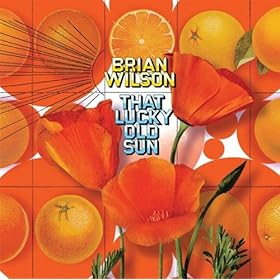
The second set comprised the entire new album, That Lucky Old Sun. An autobiographical work, TLOS presents as a whole better than it does on a track-by-track basis. Therefore, even though I had played the album a few times prior to the show, spending more time on the better tracks, the emotional richness and elegant musical and narrative arc that guides the piece only came to life for me in concert. I will listen to it differently now. It's a wonderful work, nearly as emotionally substantial as Pet Sounds but from a much more mature perspective. Musically, it's not as adventurous as his masterpiece SMiLE, but it demonstrates that his compositional and vocal arrangement powers are still in a league of their own.

After two wonderful sets, you'd think you'd heard it all, but then comes the encore set, comprising Johnny B. Goode, Fun Fun Fun, I Get Around, Barbara Ann, Surfin' USA, and Help Me Rhonda. All singalongs and dancealongs. By this point, you realize Brian has some kind of unfair advantage. He can rip off a couple of dozen of all-time classic pop masterpieces and still only scrape the surface of his catalog. Then he comes back to perform his mellow latter-day anthem of healing, Love and Mercy.

It was a two-hour, fifteen-minute show, a busy night for him. I should add that at this point in his life and career, Brian doesn't do many of his original vocal parts. He has a guy, Jeff Foskett, who handles the bulk of the falsetto work, as well as a very hot female vocalist, Taylor Mills, to handle the upper register parts (in fact, Foskett sang lead on the whole of Wouldn't It Be Nice except for the Mike Love part: "Maybe if we think and wish and hope and pray, it might come true...", which Brian sang). But not for In My Room. Foskett and Taylor provided support, but Brian dug down and put out a good lead vocal on this song with serious care and effort. Clearly, In My Room is a special song for Brian and it's something that remains very meaningful for him. It was an emotional highlight that brought moisture to my eyes, as that was the song that first made me a Brian Wilson fan 35 years ago.

Once the show was over, many people were overheard to say it was the best Brian show they'd ever seen. Respected local music writer Brett Milano, an acquaintance of mine, said as much to me directly. I would have to agree, although seeing SMiLE live a few years ago has to trump TLOS. But Brian (66 years young) and his band were simply on fire last night. It was a great, great experience. As I exited the theatre, I walked slowly and leisurely back to the subway. In spite of the cold, I was content to finally take my time and savor my feelings of gratitude and contentment, rather than rush around all stressed as I had been twice that day already. A day like yesterday is rare. It should be savored. It certainly puts me in the mood for Thanksgiving because I am truly grateful that Brian Wilson and I are alive and functional at the same time.

Wednesday, November 19, 2008

Brian Wilson Day-Night Double-Header - Part I

Brian Wilson is in Boston today. Frequent or occasional readers probably know that Brian Wilson is my greatest living hero and musical idol. (My greatest non-living hero is Abraham Lincoln, whom I'm led to understand couldn't carry a tune.) In fact, the title of this here blog, "Dove Nested Towers" is a phrase that appears in Brian's most masterful composition, in my opinion, "Surf's Up." Originally composed in 1966, finally released by the Beach Boys in 1971, and recorded under his own name in 2004, "Surf's Up" is a four-minute epic in which a concert audience takes in the fall of civilizations and the emerging world-weariness of post-JFK America. And yet, at the end, there's a hopeful note, a brighter future, and it's in the form of what? A medical marvel? An advanced computer? The words of a statesman or the weapon of a soldier?

No. It's a children's song. The way forward will come from innocence, simplicity, and youthful optimism. That was Brian Wilson's way forward, too.

Surf's Up
Brian Wilson/Van Dyke Parks

A diamond necklace played the pawn
Hand in hand some drummed along
To a handsome mannered baton
A blind class aristocracy
Back through the opera glass you see
The pit and the pendulum drawn

Columnated ruins domino
Canvass the town and brush the backdrop
Are you sleeping?

Hung velvet overtaken me
Dim chandelier awaken me
To a song dissolved in the dawn
The music hall a costly bow
The music all is lost for now
To a muted trumpeter swan

Columnated ruins domino
Canvass the town and brush the backdrop
Are you sleeping, Brother John?

Dove nested towers the hour was
Strike the street quicksilver moon
Carriage across the fog
Two-step to lamp lights cellar tune
The laughs come hard in Auld Lang Syne

The glass was raised, the fired-roast
The fullness of the wine, the dim last toasting
While at port adieu or die
A choke of grief heart hardened I
Beyond belief a broken man too tough to cry

Surf's Up
Aboard a tidal wave
Come about hard and join
The young and often spring you gave
I heard the word
Wonderful thing
A children's song

A children's song
Have you listened as they played
Their song is love
And the children know the way


Brian Wilson fell as surely as did any ancient civilization, in a swirl of drugs, mental illness, obesity, and neglect. Yet today he is fit, clean (except for prescribed psychotropics), musically and physically active, and productive, having released his 10th solo album (including one album credited to Brian Wilson & Van Dyke Parks) earlier this year, called That Lucky Old Sun.


So today, Brian appeared at Newbury Comics in Faneuil Hall to sign autographs at noon, and tonight he performs the album in its entirety (in addition to the usual supercatalog of hits) at the Orpheum Theatre. Faneuil Hall is a lovely tourist spot to walk around on a summer day, but not the easiest place to get to when you're coming from 12 miles north of the city and have to drop your oldest daughter off at school probably an equal distance west of the city. There's no parking and in addition, the temperature was in the 20s with a wind chill that made it feel like 0.

The plan was that Newbury Comics were allowing people to line up as early as 7am, then they would open their doors at 8am so people could come in, buy the new album, and get a wristband for the autograph session. Then we had to wait outside until noon. I knew I'd be lucky to get there much before 9am, so I was stressed and worried that the wristbands would be gone before I arrived. I weighed various options, including parking near my daughter's school and taking a bus, but I'd probably get a ticket; parking in a garage near Faneuil Hall, which would be very expensive; or parking at work (Boston's South End) and hustling to take any combination of bus and train that would get me to Faneul Hall ASAP. I opted for the latter approach. I missed the bus that would take me quickly and warmly to a subway station, so I walked fast and ran, the cold air burning my lungs, got on a train, got off nearby, and ran through traffic to get to Newbury Comics. I did, in fact, arrive before 9am. But was I lucky?

As it turned out, the weather (or ungenerous employers) kept a lot of Brian fans away in the early morning hours, so I was actually 10th in line. That was wonderful. Waiting in the cold was not. Fortunately, however, the Newbury Comics staff were very kind and they worked out a way that most of us could wait inside if we kept to certain places along the walls that didn't obstruct fire exits or other businesses. We passed the time talking about our lives with Brian.

There was a time, early in Brian's reemergence a remarkable 20 years ago now, when I would hold my breath whenever he appeared on TV, at a book signing, or in concert. I feared he would fail somehow, that the pressure or the unpredictability would set him off or shut him down. But he has always been a remarkably strong and committed trouper. I've seen him blow lines but he went on like the seasoned pro that he is. At this point, I'm sure he's done more live shows as a solo artist than he did with the Beach Boys. It's OK now. If I'm breathless at a Brian Wilson show now, it's because of the music, not because of my paternal concern for his well-being.

Brian was in a wonderful mood this morning. He smiled, said hi to people, even sang along a little to the new album, which was playing in the store. There were fairly strict rules about what he would sign and what we could and couldn't do (we could take photos in line but not stand next to him or touch him), and as soon as our stuff was signed we were whisked back out to the freezing street. But before I took my freshly autographed items off the table, I said, "Thank you, Brian. Your music really means a lot to me."

And really, what was cool about this morning, this day of meeting Brian ever so briefly, was not what I got but what I felt. Gratitude. And for the first time in a long time, the sense that I was lucky.

Tuesday, July 15, 2008

Brian Wilson, Calvin Theatre, Northampton, MA, 7/15/08

What kind of musical genius leads his audience in a round of "Row Row Row Your Boat" in the middle of the performance? What kind of musical genius sits at a keyboard for an entire concert yet plays nary a note on it all evening long? What kind of musical genius puts on a show in which the most notable thing to a concert-goer who has been privileged to see him several times before is that he didn't use a teleprompter to remember the lyrics?

The answer, my friend, is Brian Wilson. The pre-eminent genius of popular music over the last half-century. A man who by all that's right and holy ought to have died from massive drug abuse three decades ago, yet has outlived his two younger brothers. A man who has battled mental illness since about 1965, and continues to require medication and therapy to ignore voices in his head, and who has been a major worldwide concert attraction for the last 10 years despite an almost paralyzing anxiety that overtakes him prior to taking the stage each night.

Any true Brian Wilson fan thinks of himself as a collaborator in a way. Brian Wilson fans not only love his music, they love him. They are protective of him. They defend him in conversation and they support him with their dollars and voices. My sense is that they are more likely than not to identify as Brian Wilson fans rather than Beach Boys fans, though it is impossible to be one and not the other. Certainly that is the case with me. The first few tours that Brian did exhausted me, because I spent so much psychic energy from the audience sending him good vibrations and praying that he didn't make a mistake, or that if he made a mistake that it didn't upset him or throw him off. It seems in retrospect that I held my breath for entire shows, though I know I was singing along heartily. But when a hero is so fragile, when you're so invested in both the art and its source, when your own healing is bound up with his, you willingly carry such a responsibility.

After a while, though, I realized that Brian is strong and still has it. He's not just a dancing bear brought out to amuse; the man, despite his many issues, functions at a high level musically and as an individual. He doesn't operate at his '65-'67 peak, but that's an unrealistic expectation. Neither does Dylan or McCartney, and their best years occurred in that time period as well, IMO. His solo albums over the last few years, especially the long-awaited completion and release of SMiLE in 2004 – intended to be the Beach Boys' 1967 follow-up to Pet Sounds, it was rumored at the time to be superior to Sgt. Pepper – prove that he remains a uniquely capable and creative composer, arranger, and producer. A new ambitious suite-like work, That Lucky Old Sun, will be released in September.

Which leads me to what is now last night's performance (I have not yet retired for the evening so it still feels like today). In spite of having a new album in the can, only two tracks were previewed; the rest of the show was a "greatest hits" repertoire. Given that Brian essentially occupies his own chapter of the Great American Songbook (when an enthusiastic crowd sings along with songs composed 45 years ago, the works cease to be "oldies" and must be considered canonical), that's certainly nothing to complain about. But in recent years, Brian has performed Pet Sounds or SMiLE in their entirety, which were nothing less than transcendent events. So for me, anyway, the concert was fun and entertaining, and provided the true thrill of seeing my hero (looking and sounding very well) receive all the adoration he's always deserved; yet it wasn't a groundbreaking performance. It was great, but not his best. And while he sounded good (though he wasn't miked well), at age 66 he has given up singing certain songs. Most notably, it's something to pause about that he has barely even a harmony part to sing on his brilliant 1964 ballad, "Don't Worry Baby," which he sang so beautifully back in the day.

His band is composed of exceptional singers and musicians. This tour, several players are missing various shows because of other commitments. The band size has fluctuated; Scott Bennett, who usually plays keyboards, vibes, and guitar, was the drummer a few nights ago. The foxy female singer, Taylor Mills, was absent, to the disappointment of the male audience members. Yet it is a testament to the quality of the music itself that all those perfect melodies and harmonies ring true regardless of the how the band is constructed any given night.

I don't have a set list top of mind at the moment (it's 1:30am), but highlights were the Pet Sounds three-fer of "Sloop John B," "Wouldn't It Be Nice," and "God Only Knows;" homages to his inspirations Phil Spector ("Then I Kissed Her") and Chuck Berry ("Johnny B. Goode"); and two 1965 chestnuts, "California Girls" and "Help Me Rhonda" that, as good as they are in their original studio versions, somehow come to life in concert in such a way that it seems they can only exist in the moment, night after night, with an audience supplying their own backgrounds.

And, getting back to my open, it was exciting and positive that Brian didn't use a teleprompter. Not only did it prove his abilities to remember the words to all those songs (you can fit a bunch of two- and three-minute songs in a 90-minute performance), but it enabled him to look out more at the audience, to see the effect his music has on people, cheering, dancing, singing along to these little pieces of art that have comprised the soundtrack to our lives for so many years. At age 45, I have been a Brian Wilson fan for 32 years. That's a long time to love someone. And plenty of time to be grateful that he somehow has survived, improbably has endured, and remarkably remains inspiring.

Tuesday, July 8, 2008

In the presence of genius

The nature of my work is that every so often, I am in the presence of genius. The same, of course, cannot be said of the people who are exclusively in my presence, but they are just one degree removed from genius so that's something to recommend me, I think.

I am a writer, and, poor that I am, I write that proudly. During the day, I am a full-time marketing-type writer, working for a small agency in the South End that serves primarily clients in the high tech and higher ed fields. (At night, of course, I become Creative Writer Man, serving my own damn needs, working alone and very much removed from genius.) As such, I get the opportunity to meet with and interview people involved with innovations both big and small; many of these innovations are of modest impact, but some are truly huge.

When I am in the presence of the people responsible for the latter category of innovations, I am always processing the moment in multiple ways. First, I am talking, listening, and otherwise engaging with the individual at the purely professional level, where I am trying to get the story I need to write about from this person who has been identified as my primary information source. This requires a great deal of attention, because after all, I'm just a guy with a BA in Journalism from UMass Amherst, who still sometimes can't believe he's been a professional writer for 23 years when he feels deep inside not far removed from the stoner who used to zone out at Laser Rock shows at the local planetarium. When people are talking to me about their technology or their research, I'm kind of like George Jetson on his treadmill, and it's all I can do to maintain a mental pace that keeps the interviewee within my cognitive sights.

So that's one level. On another level, I'm a silent observer of the individual. I am always looking for physical evidence of the person's genius, such as an oversized head, a mark somewhere. I remember my mother once commenting on an artist acquaintance of my father's (the painter Hyman Bloom) that he had the most beautiful hands she'd ever seen. That made sense to me, that a painter would have beautiful hands. But does that mean a technical genius has a beautiful brain? That's not good enough for me, because I can't observe that. On this observational level, I am often somewhat disappointed. "This guy's so short, how can he be a genius?"

At a third level, I observe myself in the presence of genius. I want to make sure I am respectful but not starstruck. I want to nod and let the person know I get the gist of what he is saying but not appear like it's all so simple. I want to be sure to ask intelligent questions that demonstrate that I am quickly processing the information and moving the conversation in an interesting and appropriate direction. I have to be a good interviewer, which goes beyond simply conceiving and conducting a Q&A session.

So who are these geniuses who fight for the opportunity to be interviewed by me? I'll start with the most recent one. Tim Berners-Lee, who invented the World Wide Web. THE WEB, PEOPLE! This whole freaking thing we're obsessed with, he invented. When I walked into his office, his assistant was helping him blot a stain on his shirt; he apparently had just spilled a beverage on himself. Hey, it happens. Just because a guy invents the World Wide Web doesn't mean he can defy the laws of gravity.

Anyway, we sit in his office and he's polite and gracious, asking me about nature and scope of my assignment. Then I turn on my digital recorder and ask my first question, and it's like three people are talking all at once. He speaks so rapidly, darting from one idea to the next, in a voice that despite the English accent is in desperate need of enunciation remediation, that I worry our transcription service will fire us. He answers my questions, and I parry his points with relevant follow-up questions, leading to new fragmented threads of response that are remarkable compelling and yet frustratingly elusive at the same time. He knows more than he can tell me, and at the same time, gracious though he is, every minute he spends with me is a minute he could be spending changing the world...again.

After about 45 minutes, his cell phone rings. I had just ask a question, but within 20 seconds he turns to me and asks, "Are we done?" The answer, of course, is yes. I ask him to sign my copy of Weaving The Web, his book that details the development of the invention that earned him an OBE (I couldn't bring myself to call him Sir Tim), a MacArthur Fellowship ("genius grant"), and dozens of other prestigious honors. I thank him, he winks at me, and I leave. Impressed.

Another genius I hve known, like Berners-Lee plying his trade at MIT, is Robert Langer. Langer is a chemical engineer who could be a Nobel Laureate by the time my two-year-old hits grade school. Back in the early '70s when Dr. Judah Folkman was doing groundbreaking cancer research, Langer was among the very first people with an engineering degree to think he could play a part in biomedical research. Today, Langer is the author of about 1,000 articles, he has more than 600 patents issued or pending worldwide, his patents have been licensed or sublicensed to more than 200 companies, and his awards include 2006 United States National Medal of Science; the Charles Stark Draper Prize, considered the equivalent of the Nobel Prize for engineers; and the 2008 Millennium Prize, the world’s largest technology prize. There are so many awards and certificates on the walls of his office that I couldn't tell you what color those walls were painted.

Langer is as enthusiastic as Berners-Lee, but more lucid and articulate. He wanted me to not just to get the gist of what he was saying, but to really know the research as deeply as possible. Countless times during the interview, he jumped up from his chair to ask his secretary to get copies of articles and reports for me. I walked out of his office lugging reams of paper that described his mny innovations. One of his big areas of focus is drug delivery systems for cancer. He uses nanotechnology to develop chips that can be implanted into a patient's brain to deliver precise amounts of drugs directly to a tumor; minus this innovation, general drug delivery would lead to toxicity. I enjoyed meeting with him very much and I definitely had the sense that he was interested in helping me with the work I was doing.

Sam Bodman is GW Bush's Secretary of Energy, but I try not to hold that against him because I admire him so much. Some time before my current job, I was a Corporate Communications Writer for Cabot Corporation, at that time a Fortune 300 manufacturer of specialty chemicals. Bodman was the CEO and I had the opportunity to write speeches for him, which naturally required me to sit with him one-on-one on several occasions. Himself an MIT-trained engineer, I found him to be the sanest, smartest chief executive I have ever worked for. I left the company after only a year because it just doesn't feel like a good fit for me. I went from chemicals to public broadcasting so that tells you where my values and politics lie. He was genuinely sorry that I was leaving, not because I was irreplaceable (far from it), but because it bothered him that his company couldn't provide a good fit for a potentially valuable employee. He saw the big picture and the small details, and he was equally concerned about both. I might add that he does have a large head and I always assumed it was to hold his big brain.

I had the opportunity to meet one of my heroes, Brian Wilson, at a time in his life when he could best be described as a broken genius in the midst of healing. His autobiography had just been published, and it was later revealed that he had taken no part in its creation. He was under the control and influence of his controversial doctor, Eugene Landy, who would later be forced to give up his psychiatry license. Landy had saved his life, but was now trying to make a fortune off his troubled client by attaching his name to songwriting and production credits. Brian was doing a book-signing, a frightening proposition for him given his psychological problems and his discomfort both with performing and with being in public. He is in a much healthier place now, he tours worldwide often, to great acclaim (in fact I'm seeing him next week and will publish a review afterwards), and is much more comfortable being Brian Wilson. He is very productive and creative today, but back then he was a shell of a man.

I had already bought and read his book, and I waited in a long line to meet my hero. When I was maybe five people from him, I finally got to see him up close and I could see he was uncomfortable. He wasn't looking up at people, his hands were shaking, he really didn't want to be there. He was flanked by two "handlers" employed by Landy. When it was my turn, the handlers took an opportunity to get Brian feeling good. They asked me how long I waited, how long I was a Beach Boys fan. "You hear that, Brian? They love you!" was the extent of their therapeutic expertise.

Brian was signing my book slowly and with his shaking the autograph looked like it was written by a six-year-old. But I was determined to be as positive as I could. Though we had been told not to talk to him or expect to shake his hand, I reached my hand out and he took it. I said, "Stay healthy, man. I love you." I know it sounds corny, but he looked at me, shook my hand, heard my words. Maybe it meant a little something to him. All I know is I touched the hand that wrote "God Only Knows."

One of the hands typing this, therefore, is one degree removed from pure genius. So there.

Saturday, June 28, 2008

So, like, what's up with the Heroes and Man Crushes?

Do people still have heroes? Are there heroes to be had? I don't know, I was young and impressionable in the mid to late 1960s and it was still a fairly unjaded, hagiographic time period. If Horatio Alger was out, there was still Boy's Life magazine and the "Goofus and Gallant" features in Highlights for Children to set you straight. I was born on Lincoln's birthday and read all the myth-making biographies for young readers; because of the connection, I was always drawn to non-fiction books and biographies, and throughout my life I have been open to being inspired and influenced by other people's lives and actions. My wife will tell you (should she start her own blog) that she can often tell who I am speaking with on the phone, because I take on their verbal mannerisms. Which is not to say that I am easily led and that anyone I like automatically becomes a hero. But I do have heroes and I do find it meaningful to have heroes, if not specifically to emulate then at least to take inspiration from their words, lives, and actions.

More recently, with the advent of the term "man crush," I have acknowledged having some of them, too, and I also think a man crush is something worth having - assuming you're confident enough in your masculinity. Here, then, are my heroes and man-crushes, explained.

Abraham Lincoln. I've already mentioned I was born on his birthday. His 154th to be precise. From a young, pre-literate age, my family had always made a big deal out of this, as if it were some kind of omen. I was often given pennies. As I grew older and began to learn about Lincoln, an uncle who was an educator would quiz me on the Gettysburg Address. He would recite it and make intentional mistakes (such as "far above our poor power to add or subtract") that I would have to correct. As I grew older still, I read more sophisticated books about him, eventually studying in college with one of his premier biographers, Stephen B. Oates (see below). The more I learned about the true Lincoln - his fears and uncertainties, his depressions and his fatalism - the more I admired him. As his flaws became exposed, he became more life-size, more approachable, more real. He and I were more alike than I ever could have thought. His writing ability and his boundless compassion are beyond my reach, but they are standards to strive for. He is my oldest, deepest hero.

Brian Wilson. It was 1975 or 1976, so I was either 12 or 13. I came upon Endless Summer, a 2-LP collection of Beach Boys hits. Twenty songs, each one indispensable. I had never heard 20 brilliant songs in a row before. How could it be that one man could create such a body of work? One song, though, stood out. "In My Room." The lyrics and music touched me deeply. "There's a world where/I can go and/Tell my secrets to/In my room." My own room was such a place. I knew he knew the same feelings I had felt. That artistic and spiritual kinship was very powerful to me. The more of his music I heard, the more of his life that I learned, the more knocked out I was by his genius, his endurance, and his incredible childlike wonder and innocence. He has no business being alive at age 66 in 2008, but he is and he's still creating wonderful works. He is a very special hero to me.

Bob Dylan. As a writer, my ideal is to be able to express a big truth in as few words as possible. No one does this better than Bob Dylan. My favorite line of his is "You don't need a weatherman to know which way the wind blows" ("Subterranean Homesick Blues"). I also dig "When you ain't got nothing, you got nothing to lose" ("Like a Rolling Stone"). I once saw an exhibit of photographs of Elvis, Dylan, and the Beatles. In one room was a giant portrait of Dylan, the one from the cover fo the Biograph boxed set. I said to my wife, "If we had that on a wall in our house, I would bow and pray to it every day."

Mike Scott. Mike Scott is the leader, singer, guitarist, and songwriter for the Waterboys. He qualifies as a man crush. I'm not specifically attracted to him, but he has such rock star looks that he is sort of physically irresistible. But it's music that really makes me such a big fan of his. He's very literate and very spiritual, and both influences come out very overtly in his writing, singing, and playing. In fact, I almost called this blog "Light in My Head," a phrase from "Fisherman's Blues," but it was already taken. These days I'm pushing the Waterboys on everyone I meet, so I clearly have a crush, but I wouldn't be surprised if one day he became a hero.

Michael Nesmith. Not just the most talented Monkee, but an exceptionally unique songwriter with a voice that kills me. He's also a successful entrepreneur and a deep thinker. More a crush than a hero, but I do admire him a lot.

Carl Yastrzemksi. My all-time favorite Red Sox player. Part of what I love about him is the fact that he never won the World Series. He's a tragic hero. But that classic stance, that potato farmer work ethic, and that Impossible Dream season make him the most emotionally laden of all my heroes to me.

Tom Brady. Pure man crush. What can I say, he's just a winner, pure and simple.

Stephen B. Oates. OK, I've dealt with a president, then the musicians, a couple of athletes, time for a couple of literary folks. As I mentioned above, I studied with Oates at UMass Amherst. Yet while still in high school, I had read his Lincoln biography, With Malice Towards None: The Life of Abraham Lincoln. I took his "Civil War Era" class and read it again. In the 23 years since I graduated, I've read it three or four more times (not only because I love it, but because for a while he would send me every new edition of it, signed). What I love about Oates (and he's a crush who became a hero) is his brilliant writing style, but also his extraordinary lecture skills. I took two classes with him and every minute was riveting. He brought the characters on stage to tell their own stories. The class in which Lincoln was assassinated was one of the most moving moments of my life. At the end of the class, I literally could not move. I felt as though I had witnessed the horrific act in person, as if a member of my own family had just died. Oates brought me closer to Lincoln than anyone ever could or ever will. I'm no longer in touch with him, but he's a highly intelligent and dignified man who taught me more than he intended.

James Thurber. I don't know, maybe he's neither a hero nor a crush of mine, but there's something about his clear, witty writing and deceptively simple drawings that has stayed with me for decades. Because of him, I created for myself the distinction between a comedian and a humorist: a comedian makes you laugh, a humorist makes you smile. Ultimately, it really feels good to smile.

Max Rubin. I'll post more about my great-grandfather later. Suffice to say, more than a century ago he fled persecution in Russia to build a new life for himself in America. He left behind two children and a pregnant wife. Max stayed with his brother in New York until the Great Chelsea (Mass.) Fire of 1908. A carpenter by trade, he figured there would be a lot of work for him there. So he moved to Chelsea and in so doing ensured that his progeny would be Red Sox fans instead of being Yankees fans. Eventually Max was able to send for his family, and he fathered 11 children in all. I found out only a couple of years ago that he and my great-grandmother Rose are buried a five-minute drive from my house. Now I visit often.